

What Are The Differences Between Invoice Discounting and Factoring?
Invoice discounting and factoring both sit within the broader category of invoice finance. Each allows a business to turn unpaid invoices into working capital, yet the way they operate in practice can feel quite different. The choice you make influences how customers see your business, how much control you keep over credit management, and how flexible your funding feels over time.
Monmouth regularly speak with owners who know they need invoice finance, but are less sure whether discounting or factoring is the better fit. This guide outlines the key differences with a UK focus, so you can approach that decision with more confidence.
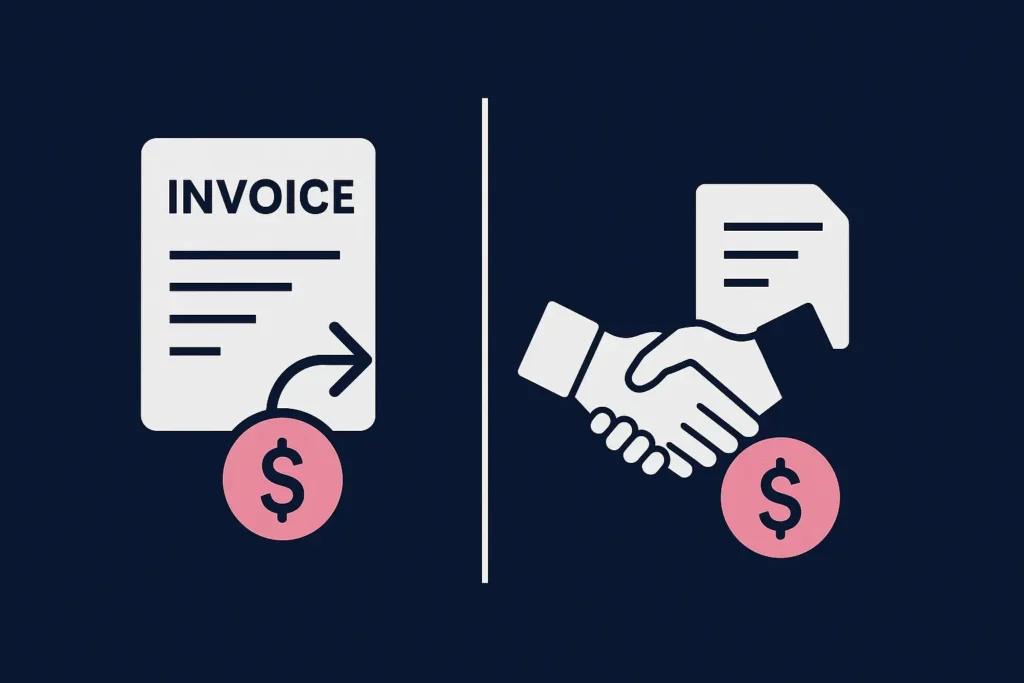
Table of Contents
Why invoice finance matters
Late payment remains a major strain on UK SMEs. Research cited by the UK government and the Federation of Small Businesses shows that a significant share of smaller firms are hit by delays, and that poor payment culture contributes to many business failures every year.
Invoice finance helps to bridge the gap between issuing an invoice and getting paid. Instead of waiting weeks or months for a customer to settle a bill, a business can unlock a large share of that value earlier and keep cash moving.
The British Business Bank describes invoice finance as a way to bridge working capital gaps by using unpaid invoices as security. Monmouth’s own guidance frames it in similar terms: a funding line that releases cash tied up in receivables, so firms can manage working capital, pay suppliers, and invest in growth.
Within that concept sit two main structures: invoice factoring and invoice discounting.
What is invoice factoring?
Invoice factoring involves selling your invoices to a finance provider for an immediate advance. In return, the factor takes over responsibility for collecting the money from your customers.
Typical features include:
- You raise an invoice to your customer as normal
- The factor advances a significant percentage of the invoice value (often up to around 80 to 90 per cent, depending on risk and sector)
- The factor then chases the customer for payment and manages the sales ledger
- When the customer pays, the balance is passed on to you, minus fees
With factoring, your customer usually knows that a third party is involved. The British Business Bank highlights this visibility, noting that factoring typically includes sales ledger management and direct collection from customers.
Because the factor actively handles collections and has more oversight of your debtors, factoring can be accessible even for younger businesses or those without a fully developed credit control function. Investopedia describes factoring as the sale of receivables, which can strengthen cash flow but also hands over part of the customer relationship to the funder.
What is invoice discounting?
Invoice discounting is usually structured as a confidential funding line secured against your unpaid invoices. You keep control of collections and the customer relationship, while the lender advances a percentage of the invoice value.
In broad terms:
- You continue to issue invoices and collect payments in your own name
- The lender advances a large share of the invoice value against your receivables
- Customers pay into an account that is linked to the facility
- As invoices are paid, the funds you have drawn are repaid, with fees deducted
The British Business Bank explains invoice discounting as a finance-only arrangement. You receive funding against invoices, but the lender does not normally manage the sales ledger or chase debtors for you.
Discounting is often used by businesses with established credit processes and reliable customers. Guidance from UK Finance notes that invoice discounting and factoring sit within a wider standards framework and can be tailored to different sectors and risk profiles.
For owners who value confidentiality and prefer customers not to know that a third party is funding their invoices, discounting can be attractive because the arrangement is usually kept in the background.

When might factoring be the better fit?
Factoring can be helpful where you:
- Have limited internal resource for credit control and collections
- Are growing quickly and your team is already stretched
- Operate in a sector where late payment is common and you want specialist support
By shifting collections to a factor, you reduce the time spent pursuing late payments and gain more predictable cash flow. The trade-off is a reduction in direct control over how customers are contacted and the tone used in those conversations.
Reputable factors will work in a way that aligns with your brand, but there is still an element of handing over part of the customer journey. Independent guides such as the MoneyHelper and British Business Bank resources encourage firms to understand how a factor will communicate with customers before signing any agreement.
When might discounting be more suitable?
Discounting often suits businesses that:
- Have a stable, mainly business-to-business customer base with fair payment behaviour
- Already run effective credit checks, chase debts promptly, and maintain accurate ledgers
Because you keep control of collections, discounting allows you to preserve customer relationships and negotiate payment plans or settlements directly where appropriate. It can feel closer to a flexible overdraft secured on your debtor book than an outsourced credit control service.
Resources such as Moneyfacts’ guide to invoice finance and the British Business Bank’s explanations stress that discounting is often reserved for businesses with stronger internal systems, precisely because the lender relies on your ability to collect efficiently.
Using impartial guidance alongside specialist advice
Before settling on either factoring or discounting, it is sensible to combine independent reading with tailored advice. The UK government and public bodies provide accessible business finance guidance, including material on invoice finance, which can help you understand how these products compare with overdrafts, term loans and other forms of working capital.
At the same time, no online guide will reflect every nuance of your sector, your customer base, and your objectives. A facility that appears ideal on paper might be less suitable once factors such as concentration risk, seasonal patterns or overseas debtors are taken into account.

How Monmouth can help
Monmouth Group acts as both a lender and a commercial finance broker, working with a wide panel of funders that provide invoice finance, business loans, asset finance, and other facilities.
In practice, that means:
- Taking time to understand how your invoices flow through the business
- Exploring whether factoring, discounting, or another type of facility is likely to deliver the best balance of flexibility and cost
- Matching you with providers whose approach to credit control and customer contact aligns with your values
- Supporting you through the application process so you are clear on pricing, security, and ongoing obligations
Monmouth places a strong emphasis on clear communication and transparent terms, helping owners make informed choices about funding rather than feeling pushed towards a specific product.
If you are weighing up invoice discounting versus factoring, a conversation with an adviser can often clarify which model fits your current position and where you want the business to be over the next few years.